Melted wax, ceromancy
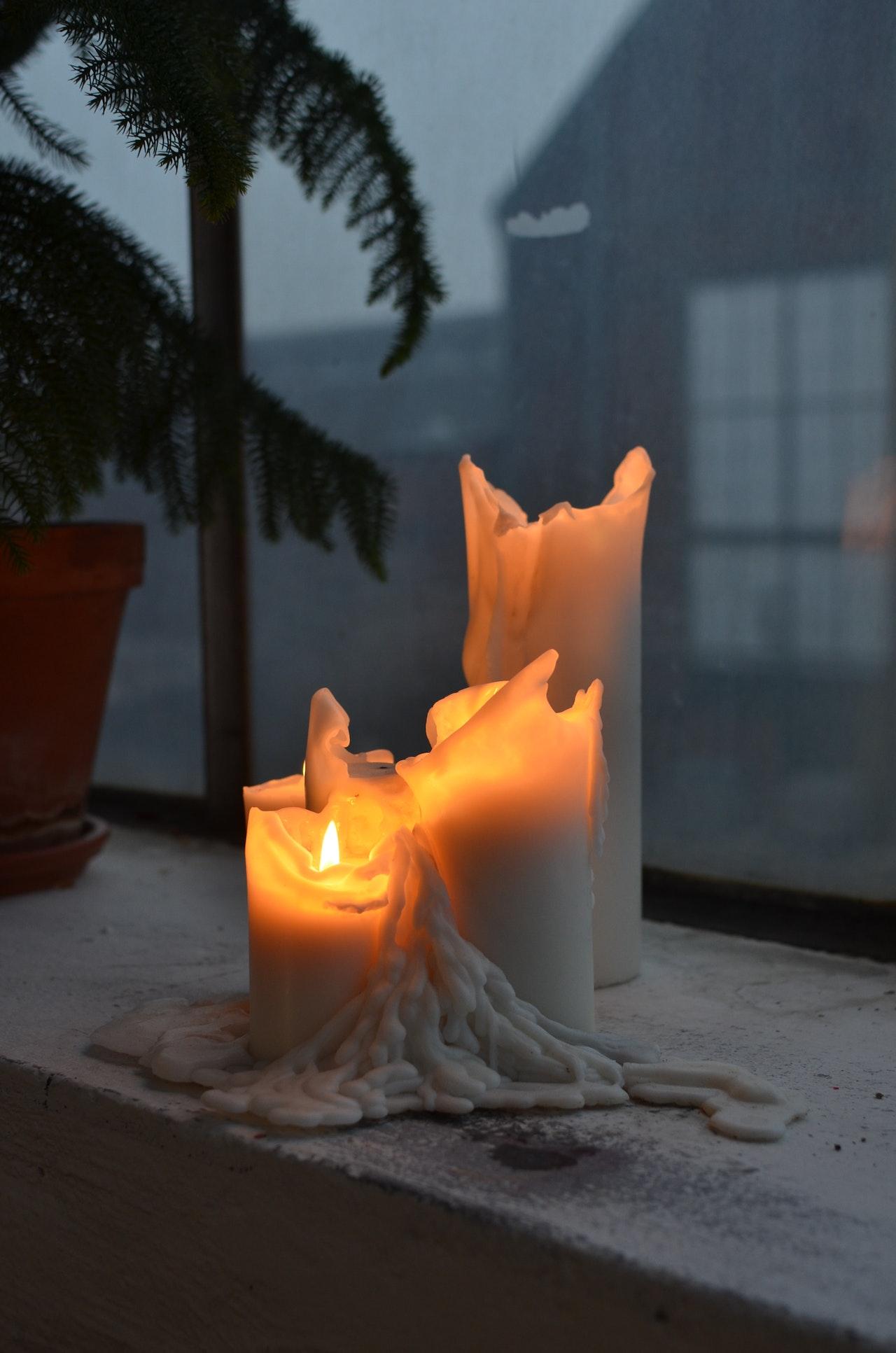
Quick answer: Ceromancy is a divination practice that reads patterns in melted wax. The practitioner melts a small amount of wax — usually from a single candle in a chosen color — and either lets it drip onto cool water or pours it carefully onto a flat surface. The shapes that solidify become the message. The wax is the medium; the seeker's intuition is the translator.
Where it comes from
This ancient practice dates back to medieval Europe, when it was believed that by melting different types of wax and observing the shapes that formed, one could gain insight into the future. The shapes were said to be omens, and the color of the wax often carried specific meaning — red for love and conflict, white for guidance and clarity, black for protection and endings. Ceromancy was often used to answer questions about love, health, success, and other matters of the heart, and it survived in folk practice across Europe and Latin America long after most divination methods had moved indoors.
In Slavic cultures, a related practice survives to this day in winter holiday traditions, where families gather, melt small pieces of wax, and pour them through a key or a slotted spoon into a bowl of cold water. The hardened figures are then "read" together, often more for entertainment than literal forecast — but the practice keeps the technique alive.
How a ceromancy session works
A modern session is simple to set up:
- Choose a candle. Color matters — red for love, white for clarity, green for growth, blue for calm, black for letting go.
- Hold a clear question. Not "what will happen this year," but "what should I pay attention to in this relationship?"
- Melt slowly. Light the candle and let it burn until a small pool of wax forms.
- Pour into cold water in a wide shallow bowl. The wax cools instantly and forms a frozen shape.
- Read what came up. Lift the shape carefully, turn it in the light, and name what you see — heart, knot, knife, bird, ladder, broken line.
The first impression is usually the most accurate one. Resist the urge to talk yourself out of it.
Common shapes and what people tend to read into them
There is no universal dictionary of wax shapes, and that's part of the practice. The shape prompts the reading; the seeker's life fills in the meaning. Still, recurring patterns include:
- Hearts and rings — affection, commitment, or its absence.
- Knots and tangles — confusion, decisions still in progress.
- Animals — loyalty (dog), independence (cat), warning (snake), patience (turtle).
- Tools — work, effort, what you're building.
- Broken lines or jagged edges — endings, things that need to release before they can finish.
Two readers can see the same shape and read it differently — and both can be useful, because the metaphor lands wherever the seeker's life has space for it.
Related terms
Other pattern-based divinations: Tea leaves (patterns left in a cup), Crystal ball (shapes seen in glass). For card-based work, see Tarot.
---